

Let’s be blunt: your traditional real estate resume is probably getting ignored. In a world with over 1.5 million Realtors, a piece of paper listing your work history isn’t enough to stand out especially when you’re trying to join a high-performing team.
Team leaders don’t care that you worked at “Generic Brokerage LLC” from 2022 to 2024. They care about your drive, your skills, and your potential to contribute to their bottom line. And they’ve developed a new, more effective way to measure it.
At DMR Media, we work with some of the top-producing real estate teams in the country. We see how they hire. And we can tell you that the old way of doing things is dead. This article will break down the 3-part “resume” that actually gets you hired in 2026 and reveal the secret weapon that 99% of agents don’t even know about.
Why Your Traditional Resume Gets Ignored
Recruiters spend an average of 7.4 seconds scanning a resume [1]. For a busy team leader, it’s probably even less. They aren’t reading your carefully crafted bullet points. They are looking for one thing: results.
A traditional resume is a list of tasks. A modern real estate resume is a showcase of achievements. If your resume says “Conducted open houses,” it’s a task. If it says “Hosted 45 open houses in 2025, generating 27 qualified buyer leads and $3.2M in transaction volume,” it’s an achievement.
The 3-Part “Resume” That Actually Gets You Hired in 2026
Top teams have moved beyond the single-page document. They evaluate candidates based on a holistic, three-part profile.
Part 1: The Quantified One-Sheet (Your New Resume)
This is the replacement for your old resume. It’s a single page that is ruthlessly focused on quantifiable results. It should include:
- A Powerful Summary: 2-3 sentences that state your GCI, your primary lead source, and your biggest strength.
- Key Performance Indicators (KPIs): A bulleted list of your most impressive numbers (e.g., transaction volume, average sale price, list-to-sale ratio, number of families helped).
- Core Skills: A mix of hard skills (CRM proficiency, contract negotiation) and soft skills (client communication, problem-solving).
Part 2: The Digital Footprint (Your Online Reputation)
Before they ever call you, team leaders are Googling you. Your digital footprint is a critical part of your modern resume. This includes:
- Your Website: Is it professional? Does it showcase your brand?
- Your Social Media: Are you active? Do you provide value?
- Your Online Reviews: What are past clients saying about you?
Your online presence should tell a consistent story of a professional, active, and well-regarded agent. It’s the ultimate form of social proof.
Part 3: The Personality Profile (The Secret Weapon)
This is the game-changer. The most sophisticated real estate teams in the country use personality assessments to build well-rounded, high-performing teams. They know that the right mix of personalities is more important than any single agent’s sales record.
If you walk into an interview with your personality assessment results already in hand, you are immediately placing yourself in the top 1% of applicants. It shows you are self-aware, you understand the industry, and you are serious about finding the right fit.
Looking to grow your Real Estate Business?
Partner with a 5-star team. Book a strategy call to see if DMR Media is the right fit—we work with select teams we know we can win for.

“We handle the digital. You handle the deals.”
Apply TodaySchedule a call or apply directly with a team member — applications reviewed within 48 hours.
The Secret Weapon: Why Top Teams Use 16 Personalities & DISC
Top teams use these tools to understand how you’ll fit into their culture and what role you’ll play. Are you a rainmaker? A nurturer? A systems operator? Here are the two tests you need to know:
Understanding the 16 Personalities Test
Based on the Myers-Briggs framework, this test categorizes you into one of 16 personality types. While there’s no single “best” type for real estate, team leaders often look for types like ENFJ (The Protagonist) or ESTP (The Entrepreneur) who are natural leaders and communicators. You can take the free test at 16personalities.com.
Understanding the DISC Assessment
The DISC assessment measures four key behavioral traits: Dominance, Influence, Steadiness, and Conscientiousness. High-producing agents often have a High D (Dominance) profile, meaning they are results-oriented and decisive, or a High I (Influence) profile, meaning they are persuasive and people-oriented. Understanding your DISC profile can help you articulate your strengths in an interview. You can learn more at discprofile.com.
How to Build Your High-Impact Real Estate Resume (Template & Examples)
Even with this new 3-part framework, you still need a solid one-sheet. Here are the five must-have sections:
- Contact Information & Professional Links: Your name, phone, email, and links to your website and LinkedIn profile.
- Professional Summary: 2-3 sentences highlighting your key achievements and personality type (e.g., "Results-driven ENFJ with a 5-year track record of exceeding sales goals, specializing in Google Ads lead conversion.").
- Key Performance Metrics: A bulleted list of your proudest numbers (GCI, sales volume, etc.).
- Work Experience: Focus on achievements, not tasks. Use the "Action-Metric-Outcome" formula for each bullet point.
- Skills & Certifications: List your real estate license, CRM software proficiency, and any relevant certifications (e.g., GRI, CRS).
Resume Example 1: The Clean, Professional Layout
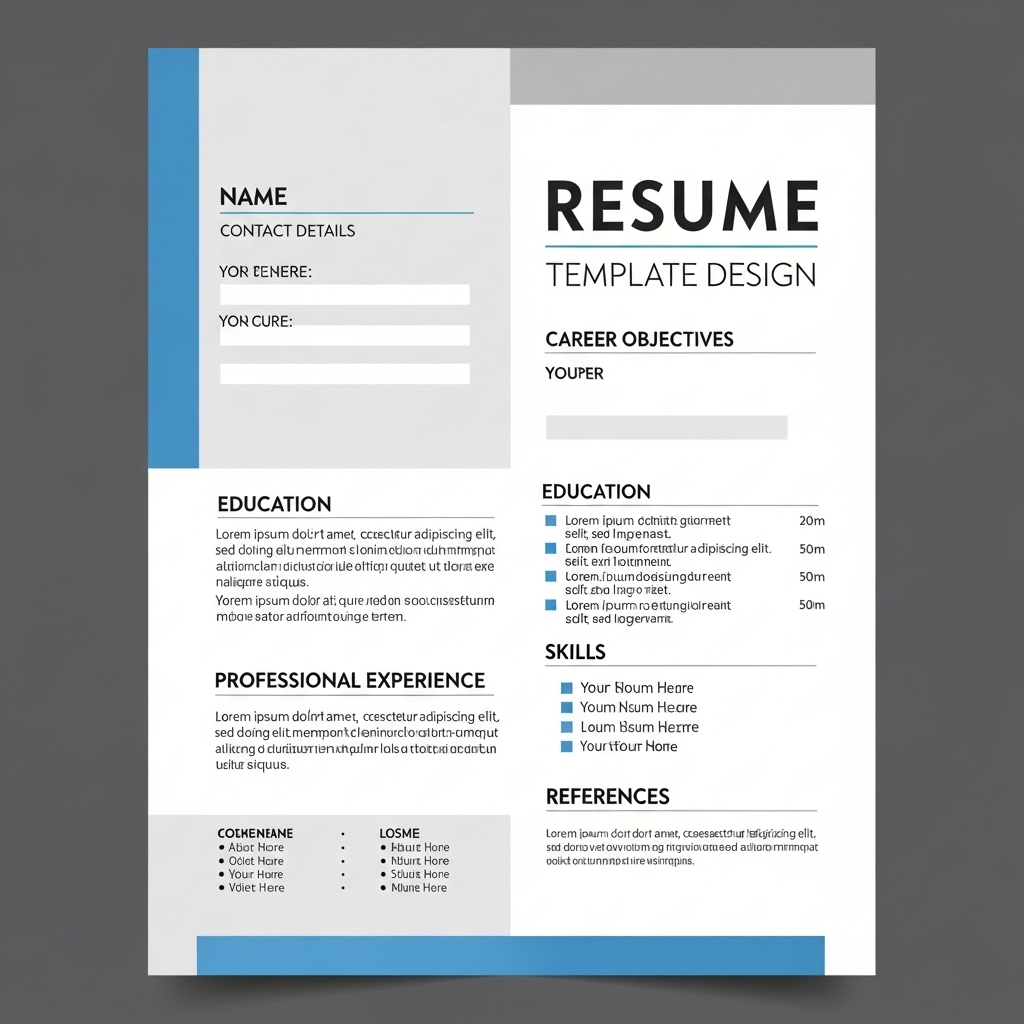
This template is ideal for agents who want a polished, no-nonsense look. Notice the clean structure: contact information at the top, a concise professional summary, and clearly defined sections for experience, education, and skills. The left-column layout makes it easy for team leaders (and ATS software) to scan in seconds. Pro tip: Swap the generic "Work Experience" bullets with your quantified KPIs; transaction volume, GCI, and list-to-sale ratio; to instantly elevate this from a standard resume to a high-impact one-sheet.
Resume Example 2: The Results-Driven Sales Resume
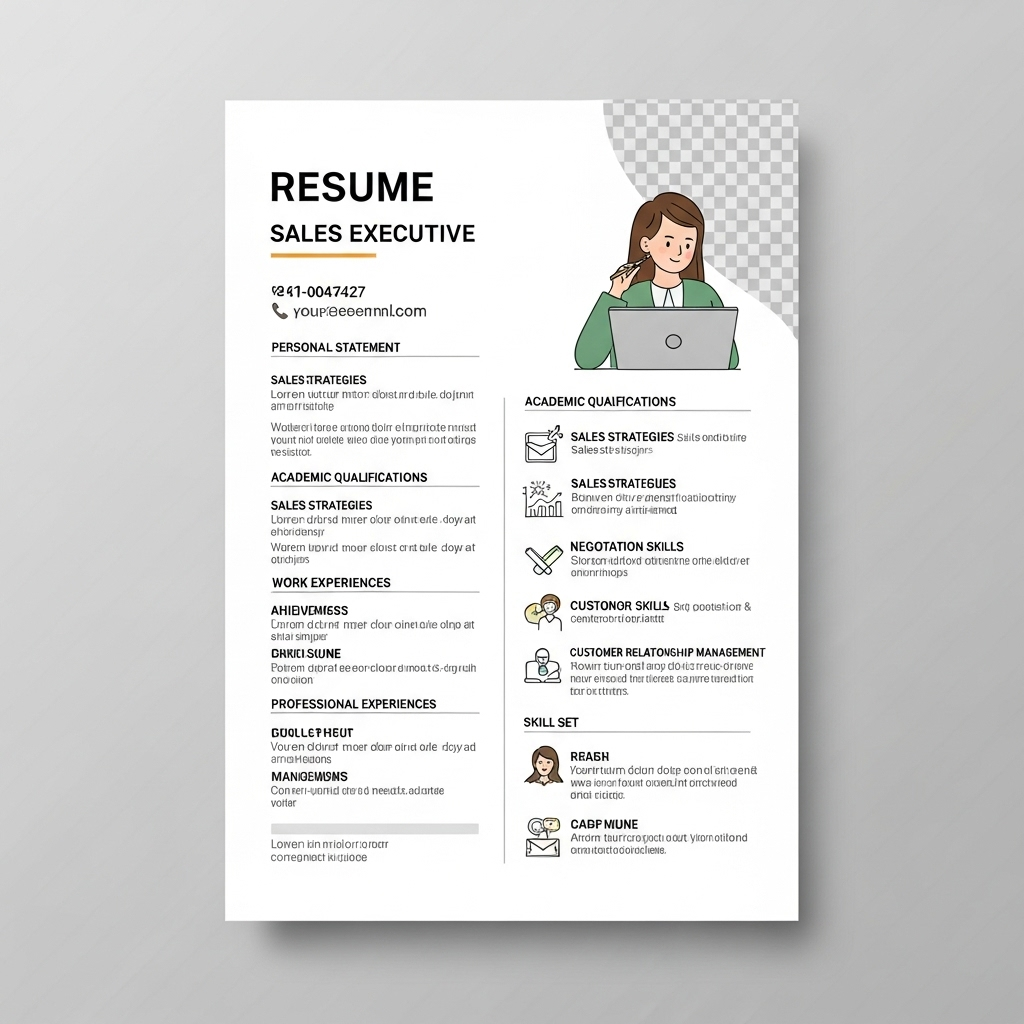
This template is built for agents who want to lead with results. The dedicated "Skills" and "Achievements" sections are exactly what top team leaders are scanning for. This format works especially well for experienced agents because it puts your numbers front and center. Pro tip: Add a one-line "Personality Profile" section right below your summary (e.g., "DISC Profile: High D/I; Results-driven communicator" or "16 Personalities: ENFJ; The Protagonist"). That single line will make your resume unforgettable.