
Empty rooms kill listings. Buyers scroll past bare walls and cold concrete floors in seconds, and a vacant home photographs smaller, darker, and cheaper than it really is.
Virtual staging solves that problem for real estate listings at a fraction of what physical staging costs. But in 2026, the game has changed. Disclosure laws are now on the books, Zillow lets buyers stage listings themselves, and AI tools have pushed prices down while raising buyer expectations.
By the end of this guide, you'll know exactly what virtual staging costs in 2026, the disclosure rules that now apply to your listings, and a six-step workflow you can run on your next vacant property this week.
What Is Virtual Staging in Real Estate?
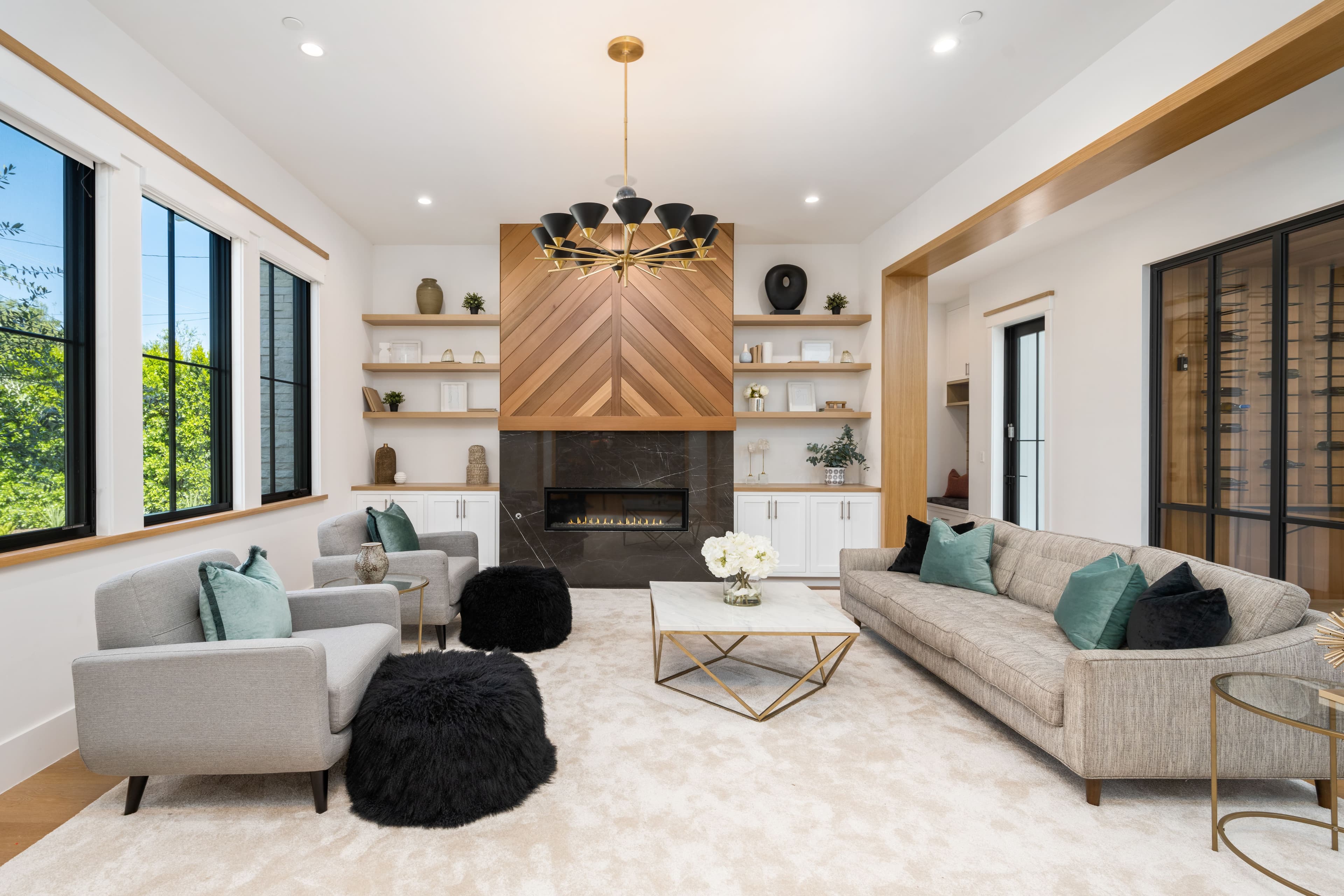
Virtual staging is the process of digitally adding furniture, decor, and lighting to photos of empty or dated rooms. A designer or AI tool edits the listing photo so buyers see a furnished, styled space instead of a vacant one. The physical property stays untouched. Only the marketing image changes, which is why disclosure rules apply.
That last part matters more than ever. Virtual staging is a photo edit, not a renovation. Used honestly, it helps buyers picture life in the home. Used carelessly, it can cross ethical and legal lines we'll cover below.
[Visual: before/after slider of a vacant living room vs. the virtually staged version]
Does Virtual Staging Help Sell a House? What the Data Says
Staging works because home searches start on a screen. According to NAR's 2025 Profile of Home Buyers and Sellers, the home search now most often begins online, the typical buyer searches for 10 weeks, and 88% of buyers still purchase through an agent. Your photos are the first showing.
The staging data backs this up. In NAR's 2025 Profile of Home Staging, 29% of agents reported that staged homes drew offers 1% to 10% higher in dollar value, and 49% of sellers' agents said staging reduced time on market. The same report shows which rooms buyers care about most: the living room (37%), the primary bedroom (34%), and the kitchen (23%).
Platform data points the same direction. When Zillow launched AI-powered virtual staging for Showcase listings in late 2025, it reported that agents using Showcase on most of their listings win 30% more listings, and that Showcase listings sell for about $7,000 more on average than comparable listings. The same release cites Zillow's 2024 Consumer Housing Trends Report finding that 71% of sellers are more likely to hire an agent who uses interactive media like virtual tours and rich visuals.
One honest caveat. These figures cover staging and enhanced listing media broadly, not virtual staging in isolation. No major study has yet isolated virtual staging's exact lift on sale price. What the data does show clearly: buyers decide online, staged rooms outperform empty ones, and richer listing media wins both buyers and sellers.
Looking to grow your Real Estate Business?
Partner with a 5-star team. Book a strategy call to see if DMR Media is the right fit—we work with select teams we know we can win for.

“We handle the digital. You handle the deals.”
Apply TodaySchedule a call or apply directly with a team member — applications reviewed within 48 hours.
How Much Does Virtual Staging Cost in 2026?
Virtual staging costs between $3 and $100+ per photo in 2026, depending on who does the work. A 2026 pricing analysis by Maverick Frame breaks it down into three tiers:
- AI and DIY tools: $3 to $15 per image. Fast and cheap. Quality varies, and you should review every render for warped furniture or impossible shadows before it goes near the MLS.
- Human-edited services: $20 to $50 per image. A designer places the furniture and checks scale, light, and style. This is the sweet spot for most listings. Examples from the same analysis: Apply Design from about $7 per image on the AI end, BoxBrownie around $30 for human-edited work.
- Full-service agencies: $50 to $100+ per image. Consistent design direction, revisions, and team workflows. Worth it for luxury listings where one bad render damages the brand.
A separate 2026 pricing guide from Stageflow shows the same pattern: generic AI tools at $5 to $15 per image and human-edited providers like BoxBrownie at about $30. A typical listing needs 3 to 8 staged images, so the whole job usually runs $60 to $300. Compare that to physical staging, which the same analysis puts at $400 to $700+ per room once delivery, setup, and removal are included, and which NAR pegs at a median of $1,500 per professionally staged home.
[Visual: comparison table of AI staging vs. human-edited staging vs. full-service agency vs. physical staging, with cost per image and turnaround]
Consider an illustrative scenario. An agent lists a vacant four-bedroom at $1.4M. Physical staging quotes come in at $6,000 for three months. Instead, she orders human-edited virtual staging for eight photos at $30 each, a total of $240, delivered in 48 hours. The listing goes live with a furnished living room, primary suite, and kitchen, the three rooms NAR says buyers weigh most. Even if the staged photos only shave a week off the listing's market time, the $240 pays for itself many times over in reduced carrying costs.
Speed is the hidden advantage. Physical staging takes days to install. Virtual staging turns around in 24 to 72 hours, which means a vacant listing never has to launch with empty photos.
Is Virtual Staging Legal? The 2026 Disclosure Rules
Yes, virtual staging is legal everywhere in the U.S. But 2026 brought real teeth to the disclosure side, and this is where agents get burned.
Three rules to follow on every virtually staged listing:
- Label every altered photo. As of January 1, 2026, California's AB 723 requires that digitally altered listing photos, including virtually staged ones, carry a disclosure such as "Digitally Altered" (plain-English summary here). Routine edits like cropping and color correction are exempt. Outside California, MLS rules vary by market, and a "virtually staged" label on the image or in the caption is the accepted standard. Check your local MLS rules before you upload.
- Never alter the permanent features of the home. Adding a sofa is staging. Removing a power line, "renovating" a dated kitchen, or adding a lawn that doesn't exist misrepresents the property. NAR's Code of Ethics requires a true picture in all advertising, and a buyer who tours a home that looks nothing like the photos is a buyer you've lost, possibly along with your reputation.
- Keep the original photos available. AB 723 compliance guidance recommends retaining or publishing the unedited originals so buyers can compare. Some MLSs make this a rule; treat it as one everywhere.
The test is simple. Stage the furniture, not the house. If an edit would surprise a buyer standing in the actual room, don't publish it.
How to Do Virtual Staging: A 6-Step Workflow
Here is the exact process to run on your next vacant listing.
- Shoot clean, high-resolution photos first. Virtual staging cannot rescue bad photography. Shoot wide but honest angles, keep verticals straight, turn on every light, and shoot at the brightest time of day. Most services want images at least 1920px wide.
- Pick 3 to 8 rooms that sell the home. Lead with the living room, primary bedroom, and kitchen, the rooms NAR's staging data says buyers value most. Skip hallways, garages, and small secondary rooms.
- Choose your service tier by price point. Under $500K listing: an AI tool at $3 to $15 per image is usually fine. $500K to $1M: human-edited at $20 to $50. Luxury: full-service with revisions, because affluent buyers notice fake-looking renders instantly.
- Match the furniture style to the buyer, not to your taste. A downtown loft gets modern or industrial. A suburban family home gets warm transitional. Send the service reference photos of comparable sold listings so the staging matches what your market's buyers actually respond to.
- Label everything and archive originals. Add "Virtually Staged" to each edited image, note it in the MLS remarks, and keep the untouched originals in the listing file. Two minutes of compliance now beats a complaint later.
- Distribute beyond the MLS. Use the staged images on your website, in social posts, and in your paid campaigns. Staged photos consistently make stronger ad creative than empty rooms, which matters if you're running Google Ads for your listings.
Turnaround from photos to published listing: 2 to 4 days for most services.
Virtual Staging for Luxury Listings
Luxury is where virtual staging demands the most care and pays the most when done right.
High-end buyers are fluent in design. A $40 AI render with a floating rug and mismatched shadows reads as cheap, and cheap is fatal at $3M. Luxury listings call for the full-service tier, custom furniture selections that match the home's architecture, and impeccable disclosure, because affluent buyers and their agents will absolutely compare photos to the walkthrough. Across the luxury listings our clients market, the pattern is consistent: presentation quality is judged before price is.
Virtual staging also solves a real luxury problem: reach. International and out-of-state buyers often shortlist homes without ever visiting. Picture an illustrative case: a $3M vacant contemporary sits 40 days with empty photos. The agent orders full-service staging for ten images at $75 each, a $750 spend, styled to the home's architecture and labeled as virtually staged. The listing relaunches with fresh photos, a video walkthrough, and a fast landing page. An out-of-state buyer shortlists it from her phone, tours it once, and writes the offer. The $750 didn't sell the house. It bought the shortlist spot, and at $3M, the shortlist is the whole game. If the listing's landing experience is weak, staged photos can only do so much, which is why top teams pair staging with a purpose-built site. See these real estate agent website samples for what that looks like in practice.
Staging is one piece of a bigger machine. For the full picture, read our luxury real estate marketing tactics for 2026.
The Bottom Line: Stage the Photos, Win the First Showing
Virtual staging in real estate is one of the cheapest, fastest upgrades an agent can make in 2026. For $60 to $300 per listing, you turn empty rooms into the furnished spaces buyers actually respond to, in the rooms the data says they care about. The rules are simple: label every staged image, never edit the house itself, and keep the originals.
Do that, and your listings enter every search with an advantage most agents still ignore.