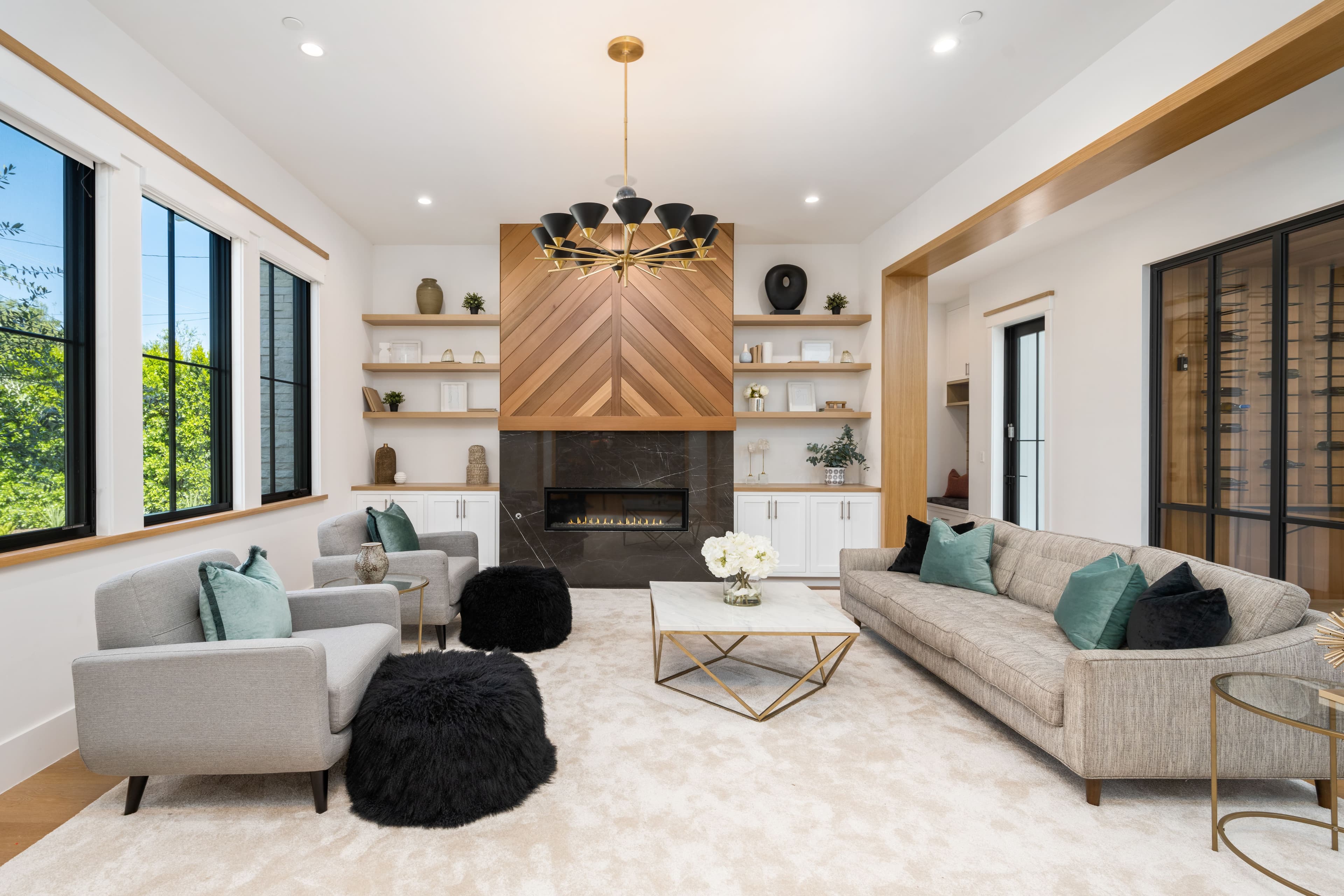

Empty rooms don't sell homes. Buyers scroll past listings where they can't picture themselves living, and by the time they click into the photos, they've already half decided to skip it.
That's the problem virtual staging solves. By the end of this guide, you'll know exactly which virtual staging companies are worth your money, how much you should expect to pay per photo, and how to pick the right one for the kind of listings you sell, whether that's a $400,000 starter home or a $4 million waterfront estate. We put this list together as a marketing agency that builds full listing campaigns for real estate agents and teams, so we're the ones fielding this exact "which staging vendor should I use" question from clients before nearly every shoot.
What Is Virtual Staging, and Why Are So Many Agents Using It
Virtual staging is the digital replacement of physical furniture staging. Instead of paying movers to haul in couches and dining tables, a designer (human, AI, or both) adds realistic furniture, decor, and lighting directly into your listing photos. The room looks lived-in. The house never gets touched.
Buyers respond to it. According to the National Association of Realtors' Profile of Home Staging, 83% of buyers' agents said staging makes it easier for buyers to picture a property as their future home. That single number explains why virtual staging went from a nice-to-have to a standard line item in most listing budgets.
The financial case is just as strong. Florida Realtors reports that virtually staged listings get 40% more views, 31% more inquiries, and hold a buyer's attention on the photos 20% longer than unstaged listings. More eyes on a listing means more showings, and more showings mean more offers.
How We Evaluated These Companies
We looked at price per image, turnaround time, whether the work is done by AI, human designers, or a hybrid of both, and how well each company handles MLS compliance (more on that below, because it matters more than most agents realize). We also weighted luxury-market fit separately, since a $60,000 fixer-upper and a $3 million estate need very different levels of design polish.
The 9 Best Virtual Staging Companies for Real Estate Agents
Pricing changes often in this space, so treat these as a starting point and confirm current rates before you commit a budget.
1. AI HomeDesign: Best for Speed and Volume
Around $0.24 per image with results delivered in seconds. AI HomeDesign builds MLS-compliant labeling into every output automatically, and offers 8 design styles across 15 room types. If you're staging 20 listings a month and can't wait 48 hours per photo, this is the fastest path from empty room to finished image.
Looking to grow your Real Estate Business?
Partner with a 5-star team. Book a strategy call to see if DMR Media is the right fit—we work with select teams we know we can win for.

“We handle the digital. You handle the deals.”
Apply TodaySchedule a call or apply directly with a team member — applications reviewed within 48 hours.
2. Virtual Staging AI: Best Budget AI Option
Priced around $0.75 per image or a flat monthly plan, with unlimited regenerations if the first pass doesn't land. More than 50 room and design styles are available. It's a solid pick for agents who want to experiment with different looks before settling on one for a listing.
3. Collov AI: Best for High-Volume Affordability
At roughly $0.25 per image on a monthly plan, Collov AI is one of the cheapest options that still includes selective furniture removal and ten free revisions. Good fit for teams staging large volumes of mid-market inventory.
4. Apply Design: Best for Hands-On Control
Around $7 to $10.50 per photo with a 10 to 15 minute turnaround. Apply Design's drag-and-drop editor gives you access to more than 18,000 furniture and decor pieces, plus 360-degree staging for virtual tours. Choose this one if you (or your marketing team) want to art-direct the final look rather than accept whatever the AI generates.
5. Styldod: Best for Human-Reviewed Consistency
Runs $16 to $23 per image with a 24 to 48 hour turnaround, done by human designers rather than pure AI. Styldod has been in the virtual staging business since 2015 and builds in "structure-lock" safeguards that prevent walls, windows, or room dimensions from being altered, which keeps you well inside MLS rules.
6. BoxBrownie: Best All-Around Value
About $24 per image with a 24 to 48 hour turnaround. BoxBrownie pairs virtual staging with 2D and 3D floor plan redraws and virtual renovation services, so one vendor can cover several parts of your listing package. Pay-as-you-go pricing with a clear revision policy makes budgeting predictable.
7. PadStyler: Best Hybrid AI and Human Option
AI staging runs about $2.65 per image in seconds; designer-created staging runs closer to $19 and takes 24 to 48 hours. PadStyler is the rare company that lets you choose speed or craftsmanship on a photo-by-photo basis, which is useful when one listing has a hero shot that deserves extra attention and a dozen other rooms that don't.
8. Stuccco: Best for Premium Hero Shots
Roughly $35 per image with same-day to 24-hour turnaround, staged by professional interior designers rather than AI. Stuccco leans toward bespoke styling, which shows in the finished product. This is the company to call for the two or three photos that will actually appear in your Instagram ad or print brochure.
9. RoOomy: Best for Luxury Listings and Developers
At about $49 per image, RoOomy is priced well above the AI-driven options, and it shows in the output. RoOomy works with human designers and partners directly with Matterport, and it explicitly markets itself to luxury listing agents and real estate developers who need staging that reads as high-end, not templated. For a $2 million-plus listing, the extra cost per photo is a rounding error against the commission on the line.
Virtual Staging vs. Traditional Staging: Which One Actually Sells Homes
Both work. The question is which one makes sense for a given listing.
Traditional, physical staging typically costs several hundred to several thousand dollars depending on the home's size and how much furniture needs to be rented and moved. Florida Realtors puts the potential savings from virtual staging at up to 97% compared to physical staging, since there's no truck, no movers, and no rental furniture sitting in a house for weeks. For a vacant home that's already on the market and generating showings, virtual staging photos alone can do most of the work that physical staging used to do, at a fraction of the price.
The catch is that virtual staging only affects the photos, not the walkthrough. A buyer who loves the virtually staged living room online still walks into an empty room in person. For listings where in-person showings drive the sale (open houses, luxury listings with heavy foot traffic), physical staging still earns its cost. For listings that live or die on their online photos first, especially out-of-market and relocation buyers who tour the listing before they ever tour the house, virtual staging is often the smarter spend.
Staged homes, virtual or physical, consistently outperform unstaged ones. Homes that are staged spend an average of 73% less time on the market than comparable unstaged listings, and about one in six buyers' agents report that staging increased the final offer price by 1% to 5% over similar unstaged homes, according to data cited by The Zebra's home staging research drawing on NAR figures. On a $1.5 million listing, even the low end of that range is $15,000 left on the table by skipping staging entirely.
How to Choose the Right Virtual Staging Company for Your Listings
Don't pick a vendor off a "best of" list and hope it works out. Run this process instead, in this order, before you spend a dollar.
- Pull your MLS's actual virtual staging policy, not a summary of it. Log into your MLS's rules and regulations page (most publish this under "photo standards" or "advertising rules") and confirm three specific things: whether a "virtually staged" tag is required on the photo itself, whether an unaltered photo of the same room must also be uploaded, and what the fine is for a violation. Save a screenshot. This takes 10 minutes and prevents a five-figure listing headache later.
- Count your rooms and price the job before you contact a vendor. A standard listing package runs 15 to 20 photos, but only 3 to 6 rooms typically need staging (living room, primary bedroom, dining room, plus a kitchen or office if vacant). Multiply that room count by each vendor's per-image rate from the table above. That's your real quote, not the "starting at" price on their homepage.
- Email two vendors the same test room and compare the results side by side. Send the identical empty-room photo to a fast AI option (say, AI HomeDesign or Collov AI) and a human-design option (Styldod or, for a luxury listing, RoOomy). Most will run one sample free or for a few dollars. Put both results next to your listing's actual comps to see which style matches what's already selling in that price range.
- Ask the vendor directly: "Do you alter wall placement, window size, ceiling height, or room dimensions?" The answer should be no, full stop. If a rep hedges or says "we can adjust for a better look," walk away. This single question filters out the vendors that will get your listing flagged.
- Match turnaround time to your actual shoot-to-list gap, in hours, not days. If your photographer shoots Tuesday and the listing goes live Thursday morning, a 24 to 48 hour vendor works fine and usually costs less. If you're listing same-day off a phone photo, you need a sub-hour AI tool and should budget accordingly.
- Lock in per-listing budget by price tier before your first order, and write it down. A workable starting rule: under $500,000, budget $50 to $150 in virtual staging per listing using AI tools; $500,000 to $1.5 million, budget $150 to $400 using a hybrid or human vendor; above $1.5 million, budget $400 to $1,000 and use a human-design, luxury-focused vendor like RoOomy or Stuccco for at least the hero shots.
The MLS Disclosure Rule Every Agent Needs to Follow
This is the part agents skip, and it's the part that gets them fined. Virtually staged photos must be clearly labeled as virtually staged in your MLS listing, and most boards also require you to include at least one unaltered photo of the same room. Florida Realtors is explicit that agents must avoid any alteration that misrepresents the property, including changing room dimensions or hiding structural flaws, and that skipping disclosure risks MLS fines and ethics complaints. Rules vary by board, so confirm your local requirements before your first virtually staged photo ever goes live. Every legitimate vendor on this list will label images for you if you ask, but the disclosure obligation is yours, not theirs.
Two Ways This Plays Out in Real Listings
Consider an agent in Naples, Florida with a vacant $2.8 million waterfront condo. The developer needs photos live before the model unit is furnished. She uses RoOomy for the hero shots (the living room and primary suite that will anchor the listing and the print ad) and pairs it with a full professional photography shoot of the empty unit for every other angle. Total virtual staging spend: under $300. The listing goes live within a week of the shoot instead of waiting a month for a physical staging crew.
Now consider a team in Ohio managing 30 active listings a month in the $250,000 to $450,000 range. Paying $35 per image across hundreds of photos isn't realistic. They run AI HomeDesign or Collov AI across the board at under a dollar an image, reserving a human vendor only for listings that stall past 30 days on market. The math works because the volume is high and the price point doesn't demand bespoke design.
Same category of tool, two completely different budgets, because the listings called for different things.
The Bottom Line
Virtual staging is no longer optional for a listing that's going to compete online, but which company you use should depend entirely on your price point, your volume, and how much design polish the listing actually needs. Run the numbers, check your MLS rules, and pick the vendor that matches the commission you're chasing, not just the cheapest per-image rate.
Virtual staging is one piece of a listing's marketing. It only pays off when the underlying photography, the website the listing lives on, and the ads driving traffic to it are all built to convert. If you're evaluating your full marketing stack, our breakdown of the best real estate marketing agencies and real estate photography companies worth working with covers the rest of that stack. Agents and developers working on new luxury construction should also see our luxury development marketing guide, since staging strategy for a pre-construction unit works differently than for a resale listing.
If you'd rather have a team handle the whole picture, from photography to staging strategy to the ads that put your listings in front of buyers, that's exactly the kind of full-service marketing partnership we run for luxury agents and teams. Reach out and we'll walk you through what that looks like for your market.